NO AI TRAINING: Without in any way limiting the author’s exclusive rights under copyright, any use of this content to “train” generative artificial intelligence (AI) technologies to generate text is expressly prohibited. The author reserves all rights to license uses of this work for generative AI training and development of machine learning language models. This content is not made using generative AI.
Turns out, taking a break from publishing last month was the right move. Perhaps some part of me knew it was coming. It was likely just November being November. But, either way, I lost about half of the month to a very strange, very unlikely infection.
The acute symptoms lasted for about 1.5 weeks, in which time I could do almost nothing. I lay in bed, or sat in my bungee chair when I was able to. I watched movies. A lot of time was spent staring at the wall.
All the while, the world outside my room kept turning. The people I care about did their normal things. With little else to do, I found myself thinking a lot about crip time.
I should note, I don’t plan on giving a definition in this post. So if you’re asking yourself “what is crip time?” then I recommend you read a fantastic essay in Disability Studies Quarterly about six ways of looking at crip time.
With that said, let’s dive in.
Table of Contents:
Crip time directly opposes productivity culture.
Rachel and I talk a lot about productivity over on their blog, and I don’t want to repeat any of those thoughts. But I do want to explore how crip time and productivity play with— or rather, work against— each other.
In the second week of my illness, I emailed my research advisor to say that, because I’d been in the hospital twice that week and felt awful, I would be unable to perform research. I was going to use what little sick time I’d saved up throughout the semester, and could hopefully pick back up next week.
Admittedly, my advisor scares me. She has a bounty of achievements and is such a respected scholar in disability studies and early modernism. I was anxious for her response.
“Please take all the time you need to get healthy again,” she wrote to me. “Take crip time.”
I laughed at myself. Of course a disability studies scholar would tell me to take crip time. I should never have expected her to demand productivity from me. Yet the college institution is so drenched in productivity culture that her response is an exception, not the norm.
It also made me think about the sick time I was using. It literally took two back-to-back emergency room trips for me to take crip time. Despite all the ways I want to deny it, I haven’t fully figured out how to survive without the framework of productivity culture.
(post continues below)
Don’t want to miss a post? Subscribing helps me out and ensures that you receive email updates for every post, with no extra unwanted emails. Be sure to check your inbox for a verification email.
Yet, I now live in crip time. Getting out of bed requires at least 20–30 minutes. Being in bed for sleep demands a minimum of 9 hours— and my bodymind would prefer much more. A one-hour event is really two hours worth of preparation and energy.
I do not exist in the same time many of my peers experience. My bones know that. I, however, struggle with it.
Productivity culture does not work with crip time. It simply doesn’t. But for many Americans, and others around the globe, conceptions of time are inherently tied to productivity and capitalism.
Think of how many people recognize days of the week by what they’re doing at work. How many see Saturday and Sunday as “rest” or “chore” days.
To experience nondisabled time is to sit in a flow of chronology, moving forward at a steady, even pace. There is a clear yesterday and tomorrow, past and present. But for many, the question is not “how long is an hour?” but instead, “how much can I get done in an hour?”
I can exist in nondisabled time, when I really need to, for a few hours. That’s all. Inevitably, I will crash back into my world of crip time, and the recovery takes hours, even days, of intentional rest and nourishment.
As I write this, I sit with a soul-deep exhaustion, a fatigue left behind by November’s virus. I have tried to push against it, and each time it’s knocked me back down. Its message is clear: exist in crip time, acknowledge the rest you need for survival. To resist is to invite more suffering, more pain.
I do not have pure “rest” days. Each day is a dedication to rest, interspersed with periods of work, socialization, and keeping my bodymind nourished.
Productivity culture does not like crip time. Crip time is the stray rock that halts the gears of productivity. To shift into crip time is to break the structure of productivity altogether.
Rejecting linearity.
One of my favorite pieces of the DSQ article I linked in the intro is Samuels’ explanation of how nonlinearity is a key element of crip time. Until reading that, I had not seen such an eloquent way of voicing something I’ve felt, and said, for years.
“I’m a twenty-something-year-old trapped in the body of a sixty-something-year-old,” I can often be heard saying. I have conflicting feelings about using the word trapped here, but that’s for another post.
The point is, I’m not joking. Whenever I tell someone I have arthritis, there’s a 50/50 chance they respond with some variation of “aren’t you too young for that?” or “I thought that was only for old people.” In most medical specialist offices I go to, I am the youngest one in the waiting room by at least a couple decades.
I am living with impairments that are typically associated with the elderly. My body’s deterioration in functioning makes me, physically and mentally, much older than my peers, and certainly older than the 22 years nondisabled time would ascribe to me.
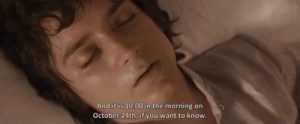
Crip time gives me a space for that. In crip time, I am not tied to being 22 years old. I am not too young or too old for my impairments. There are no necessary qualifications to accept the validity of my crip-ness.
Similarly, floating in crip time, I feel no ties to narratives of recovery, or linear processes of injury/illness to healing to health. I have good days and bad days. Each of my impairments is a stat and each morning, a new die is rolled to determine its value for the day.
None of them exist separately; a high roll on one might modify the value of another. In nondisabled time, this constant flux is confusing, and thus often a source of discomfort. Nondisabled folks hate discomfort. Crip time is flux.
At times, crip time is constricting, depressing, a source of shame or conflict. But it is also an acceptance, a state of comfort and ease. It’s a space where I get to exist on my terms, not in the expectations of others.
Crip time is my reality. Crip time is also my liberation.
Did you learn something new about crip time? Do you have other reflections on it? You can let me know in the comments down below or on my Instagram (@ashtonrosewrites) or Facebook (@ashtonrosewritesfb). And if you liked this post, make sure to subscribe so you don’t miss the next one.

 Ashton Rose